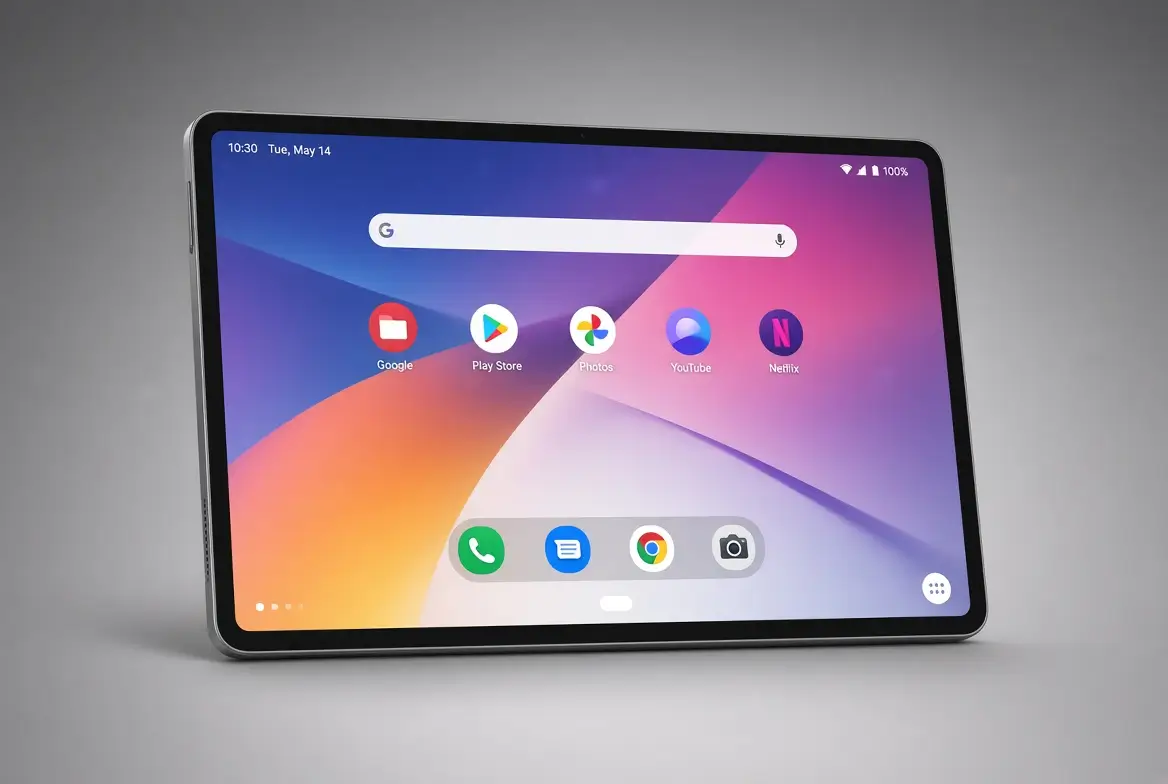
Android tablets have finally grown up. The days of stretched phone apps and abandonment after one update are largely behind us. Samsung’s seven-year support commitment, Google’s Tensor-powered Pixel Tablet 2, and OnePlus’s aggressive pricing have forced the category forward. We tested five leading models across productivity (DeX, split-screen, keyboard cases), media consumption (display quality, speakers, battery), and creative work (stylus latency, pressure sensitivity, color accuracy). Here’s what actually deserves your money.
Quick Comparison
| Tablet | Display | Processor | RAM/Storage | Battery | Stylus | OS Updates | Price |
| Samsung Galaxy Tab S11 Ultra | 14.6″ 120Hz AMOLED 2960×1848 | Dimensity 9400+ | 12GB/512GB–16GB/1TB | 11,200 mAh | S Pen (incl.) | 7 years | $1,199 |
| Samsung Galaxy Tab S10 FE+ | 13.1″ 90Hz IPS 2880×1800 | Exynos 1580 | 8GB/128GB–12GB/256GB | 10,090 mAh | S Pen (incl.) | 7 years | $549 |
| OnePlus Pad 3 | 11.6″ 144Hz LCD 2800×2000 | Dimensity 9400 | 12GB/256GB–16GB/512GB | 9,510 mAh | OnePlus Stylo 2 (opt.) | 4 years | $479 |
| Google Pixel Tablet 2 | 10.95″ 60Hz LCD 2560×1600 | Tensor G5 | 12GB/128GB–256GB | 7,020 mAh | USI 2.0 (opt.) | 7 years | $499 |
| Lenovo Idea Tab Pro | 12.7″ 144Hz LCD 2944×1840 | Snapdragon 8 Gen 3 | 8GB/128GB–12GB/256GB | 10,200 mAh | Lenovo Tab Pen Plus (opt.) | 4 years | $399 |
1. Samsung Galaxy Tab S11 Ultra — Best Android Tablet Overall
The Tab S11 Ultra is Samsung’s iPad Pro killer, and it largely succeeds. The 14.6-inch Dynamic AMOLED 2X panel is simply the best display on any Android tablet: 120Hz, 2960×1848, 1,600 nits peak brightness in HDR, and Gorilla Glass Armor 2 with anti-reflective etching that genuinely works outdoors. MediaTek’s Dimensity 9400+ (TSMC 3nm, Cortex-X5 prime core at 3.63 GHz) handles everything from multi-window DeX desktop mode to Genshin Impact at max settings without breaking a sweat.
The included S Pen (4,096 pressure levels, 2.8ms latency) magnetically charges on the back and now supports hover gestures up to 10mm — useful for previewing brush size in Clip Studio Paint or navigating DeX without touching the screen. The Book Cover Keyboard (sold separately, $229) adds a proper trackpad and function row, making DeX a viable laptop replacement for writing, coding, and spreadsheet work. Quad speakers tuned by AKG deliver the loudest, clearest audio on any tablet we tested.
IP68 dust/water resistance means you can wipe it down with a damp cloth or use it by the pool. No other flagship tablet offers this.
The 11,200 mAh battery delivers 14+ hours of mixed use (video, browsing, light gaming) and supports 45W wired charging. At 732g (Wi-Fi) / 748g (5G), it’s heavy for one-handed use but expected for this class. Seven years of OS and security updates (until 2033) is the industry gold standard.
2. Samsung Galaxy Tab S10 FE+ — Best Value for Most People
The Fan Edition Plus hits the sweet spot for 90% of buyers. You get a 13.1-inch 90Hz display (IPS, not AMOLED, but sharp at 2880×1800), the same S Pen in the box, IP68 rating, microSD slot (up to 2TB), and Samsung’s excellent One UI multitasking — all for $549. The Exynos 1580 isn’t flagship silicon, but it handles split-screen, DeX, and daily driving without hiccups.
Build quality is premium: aluminum frame, flat edges, minimal bezels. The 10,090 mAh battery easily clears a full day. 45W charging is supported (charger not included). Four speakers (vs. Ultra’s six) still sound great. The compromise: 90Hz vs 120Hz, IPS vs AMOLED (lower contrast, no HDR brightness), and no 5G option in some regions. For students, note-takers, and media consumers, this is the rational choice.
S Pen latency is identical to the Ultra — Samsung didn’t cripple the stylus experience on the FE model.
3. OnePlus Pad 3 — Best Performance Per Dollar
OnePlus’s third tablet is a spec sheet monster at a mid-range price. The 11.6-inch 144Hz LCD (2800×2000, 7:5 aspect ratio) is fantastic for gaming and video. Dimensity 9400 matches the S11 Ultra’s chipset for hundreds less. The 9,510 mAh battery with 67W SuperVOOC (0–100% in 55 minutes) is the fastest charging in this class. OxygenOS 15 on tablet adds genuine productivity features: free-floating windows, improved split-screen, and a desktop-style dock.
The OnePlus Stylo 2 (sold separately, $99) offers 4,096 pressure levels and 2ms latency — competitive with S Pen. However, OnePlus’s four-year update promise (3 OS + 4 security) falls short of Samsung’s seven. Build quality is good but not IP-rated. No microSD slot. No cellular option. For pure media consumption and gaming at $479, it’s unmatched.
4. Google Pixel Tablet 2 — Best for Google Ecosystem & Smart Home
The Pixel Tablet 2 refines Google’s unique ‘hub + tablet’ concept. The 10.95-inch 60Hz LCD is the weak link — 60Hz in 2026 feels dated, and 500 nits peak brightness struggles outdoors. But Tensor G5 delivers the smartest Android experience: on-device Gemini Nano for voice typing, summarization, and Magic Editor; seamless Cast from Pixel phones; and the best-in-class Google Home integration when docked on the included Charging Speaker Dock.
The dock transforms the tablet into a Nest Hub Max equivalent: always-listening Assistant, smart home controls, photo frame, and surprisingly good bass. Undocked, you get 12 hours of light use. USI 2.0 stylus support (third-party, ~$60) works well for note-taking but lacks Samsung’s air gestures and system-level integration. Seven years of updates matches Samsung. At $499 with dock included, the value calculation depends entirely on how much you want a smart display.
5. Lenovo Idea Tab Pro — Best Budget Large-Screen Tablet
Lenovo’s 12.7-inch 144Hz LCD (2944×1840, 3:2 aspect) is a productivity powerhouse at $399. The 3:2 ratio means more vertical space for documents, code, and web pages — a genuine advantage over the 16:10/7:5 panels elsewhere. Snapdragon 8 Gen 3 (last year’s flagship) still crushes mid-range chips. The 10,200 mAh battery with 45W charging delivers 13+ hours real-world use.
Lenovo’s productivity software shines: desktop-style windowing, excellent keyboard cover (sold separately, $129 with trackpad), and the Tab Pen Plus (4,096 pressure, $49) with a physical shortcut button. Four years of updates (3 OS + 4 security) is the weak point. No IP rating. Speakers are average. But for a 12.7-inch 144Hz tablet with flagship-adjacent performance under $400, the compromises are calculated and reasonable.
The Bottom Line
If budget isn’t a constraint and you want the best Android tablet, period: Galaxy Tab S11 Ultra. If you want 90% of that experience for 45% of the price: Galaxy Tab S10 FE+. If gaming and media are priorities and you don’t need cellular/IP rating: OnePlus Pad 3. If you’re all-in on Google Home and want a tablet that doubles as a smart display: Pixel Tablet 2. If you need maximum screen real estate for productivity on a strict budget: Lenovo Idea Tab Pro. Every tablet here is genuinely good — the category has finally matured.