Labeling a processor “octa-core” on a spec sheet says as little about real-world performance as engine displacement says about how a car handles. Marketing numbers are easy to display, but they mean little without context.
Modern marketing relies heavily on high numbers, specifically gigahertz, core counts, and synthetic benchmark scores. Consequently, consumers often compare metrics that are not directly comparable. Understanding mobile processor architecture helps buyers select the right chip for their specific needs.
A Processor Is More Than Cores and Clock Speeds
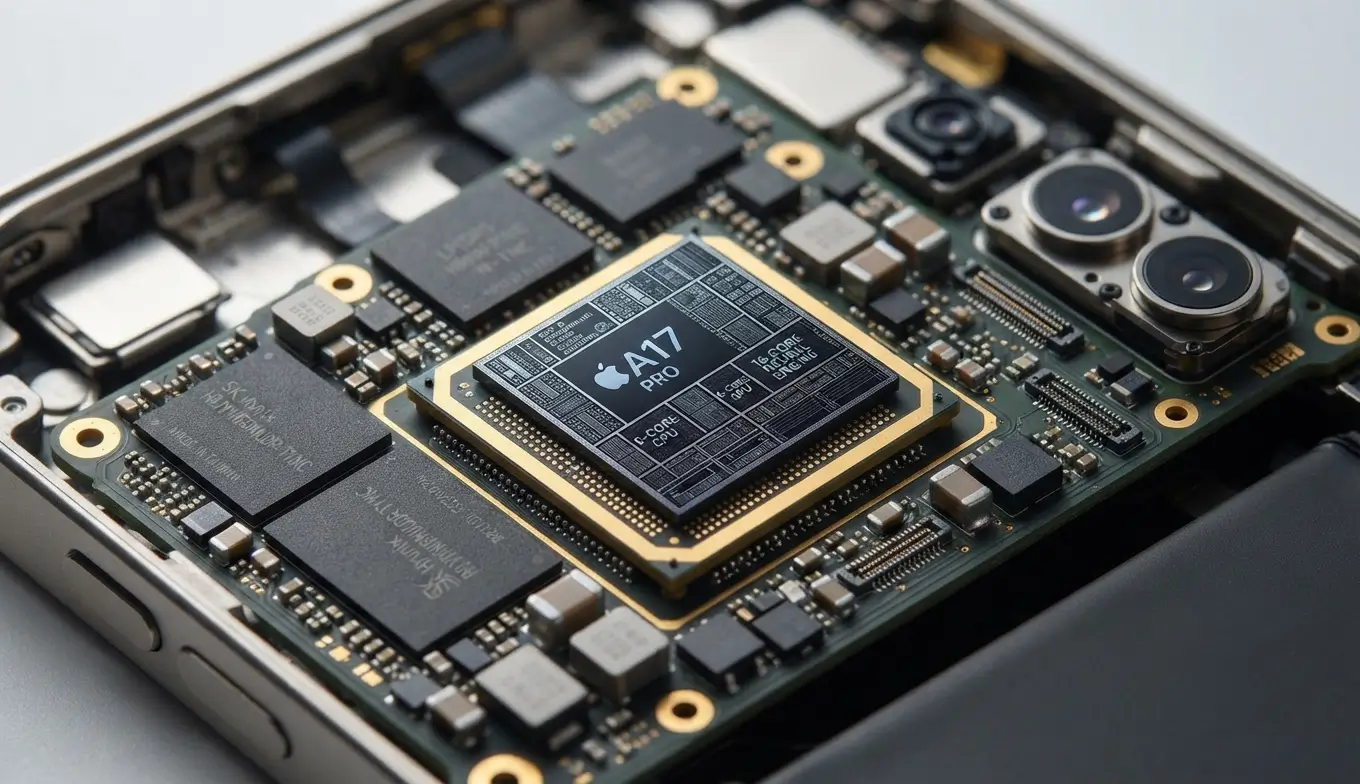
Modern smartphone processors are rarely standalone CPUs. Instead, smartphones run on a System on a Chip (SoC), a single silicon platform housing several specialized processing units:
- CPU (Central Processing Unit): Handles system logic and general application tasks, like writing a text for work, placing a few bets via 22 Bet in the evening, or watching a movie.
- GPU (Graphics Processing Unit): Renders games, system animations, and user interface elements.
- NPU (Neural Processing Unit): Manages on-device artificial intelligence workloads.
- ISP (Image Signal Processor): Processes raw visual data from camera sensors.
- Integrated 5G Modem: Manages cellular network connectivity.
Because of this heterogeneous architecture, chips with identical advertised clock speeds often perform differently under real workloads. One platform may excel at graphics processing, another at computational photography, and a third at thermal efficiency.
What the Processor Controls (and What It Does Not)
Buyers often assume the processor dictates every aspect of the user experience. In reality, daily performance depends equally on display hardware, camera optics, and software optimization.
Gaming and Graphics
Smooth gaming performance depends primarily on GPU capability rather than CPU speed. A powerful GPU maintains higher frame rates and visual stability at demanding graphics settings.
Yet sustained performance depends heavily on thermal design. In compact smartphone bodies, silicon chips heat up under load and lower their operating frequencies to manage temperature, a process known as thermal throttling. Devices equipped with dedicated vapor-chamber cooling systems maintain peak performance far longer.
Photography and Video Processing
Raw processing power alone does not determine image sharpness or video quality. Image output depends on the coordination between optical lenses, camera sensors, and the ISP.
A flagship SoC accelerates night mode processing and high-bitrate 4K video recording, but it cannot compensate for weak camera optics. A device combining a flagship chip with subpar optics will often yield worse photos than a mid-range phone equipped with a premium camera sensor.
Energy Efficiency and Heat Management
Energy efficiency depends heavily on the semiconductor manufacturing node, measured in nanometers (nm). Smaller manufacturing nodes, such as 3nm compared to 4nm, dissipate less energy as heat and keep devices cooler under sustained workloads.
Real-world battery life involves more than the chipset; total battery capacity, display power draw, and background software management play critical roles.
On-Device AI and Machine Learning
The NPU handles tasks such as real-time voice recognition, local language translation, and photo object removal. Although NPU performance, measured in trillions of operations per second (TOPS), increases with each generation, these capabilities offer future-proofing rather than an immediate reason to upgrade.
How to Read Spec Sheets Without Marketing Confusion
- Clock Speed (GHz): Clock speed alone is a misleading metric. A newer core architecture running at 3.0 GHz frequently outperforms an older architecture at 3.5 GHz because it executes more instructions per cycle (IPC).
- Core Count: Eight cores do not make a smartphone eight times faster. Modern SoCs use asymmetrical core configurations, typically pairing high-performance cores for heavy tasks with high-efficiency cores for background operations.
- Architecture: Most mobile processors build on ARM instruction set architectures. Some chipmakers design custom CPU cores, whereas others license reference designs directly from ARM. This produces distinct performance profiles. Certain chips excel at short bursts of peak power, whereas others maintain stable, sustained output over long periods.
- Process Node (nm): Higher transistor density reduces power consumption and heat output. Shrinking the node size lowers power draw and minimizes thermal throttling under identical workloads.
Major Mobile Silicon Manufacturers
- Qualcomm Snapdragon: The dominant platform in high-end Android devices, recognized for strong GPU performance and widespread developer support.
- MediaTek Dimensity: High-end Dimensity chipsets provide competitive processing power and energy efficiency, matching top-tier rivals in flagship benchmarks.
- Apple A-Series: Exclusive to iPhones, these chips lead in single-core performance and thermal efficiency due to custom core designs and tight integration with iOS.
- Samsung Exynos: Powers select global Galaxy models, with recent generations focusing on advanced gate-all-around (GAA) node efficiency.
- Google Tensor: Custom-designed for Pixel devices, prioritizing machine learning tasks and image processing algorithms over raw graphics output.
- Huawei Kirin: Proprietary processors engineered for Huawei hardware, operating within a fully independent software and hardware ecosystem.
2026 Flagship Silicon Comparison
| Chipset | Node & Architecture | Graphics Unit | Key Focus Area |
| Snapdragon 8 Elite Gen 5 | 3nm (N3P) / 2+6 cores, up to 4.6 GHz | Adreno 840 | Peak performance & gaming stability |
| Dimensity 9500 | 3nm (N3P) / 1+3+4 cores, up to 4.21 GHz | Mali-G1 Ultra MC12 | Graphical output & multi-core efficiency |
| Apple A19 Pro | 3nm / 6 cores, up to 4.26 GHz | Apple 6-core GPU | Single-core speed & thermal stability |
| Exynos 2600 | 2nm (GAA) / 1+3+6 cores, up to 3.8 GHz | Xclipse 960 | Node density & energy efficiency |
| Google Tensor G5 | 3nm / 8 cores | IMG DXT-48-1536 | Computational photography & on-device AI |
Real-World Performance Analysis
- Peak Power: The Snapdragon 8 Elite Gen 5 and Dimensity 9500 deliver top frame rates in demanding 3D titles, but sustained output depends on the phone’s internal cooling system.
- Thermal Stability: Stress tests indicate the Apple A19 Pro maintains lower surface temperatures under load, delivering consistent output without excessive heat.
- Efficiency: The 2nm gate-all-around architecture in the Exynos 2600 focuses on reducing power draw and controlling operating temperatures. By contrast, Google’s Tensor G5 allocates silicon area to camera pipeline processing and local AI models rather than peak CPU speeds.
Mid-Range Processors: When Flagship Chips Are Unnecessary
For everyday smartphone tasks, flagship processors are rarely required. A well-optimized mid-range processor handles web browsing, social media, and GPS navigation without stutter.
- Casual Gaming: Processors like the Snapdragon 7-series or MediaTek Dimensity 8000-series maintain steady frame rates at medium settings without excessive heat generation.
- Productivity and Media: Standard applications perform identically on mid-range and flagship hardware. Budget chips handle calls, messaging, and media streaming easily, though resource-intensive applications will expose their hardware limitations.
How to Make the Right Choice
A mobile processor is a complex system of specialized components, not a single speed metric. No single flagship processor dominates every category; individual chips prioritize raw gaming power, thermal efficiency, or machine learning workloads.
Selecting the right processor depends on personal usage priorities, whether that means mobile gaming, photography, battery longevity, or heavy multitasking. Synthetic benchmarks reveal only part of the story. Thermal cooling, camera optics, and software optimization ultimately dictate daily user experience.